History of Westminster Meeting House
Westminster Quakers have worshipped in this part of London since 1655. Our Meeting House today sits just off St Martin’s Lane, quietly tucked behind the Georgian frontage at number 52 – an oasis of stillness in the heart of the West End.
This page tells the story of the building and the Meeting: where we began, how we arrived on this site, what happened during the Blitz, and what makes the Meeting House distinctive today.
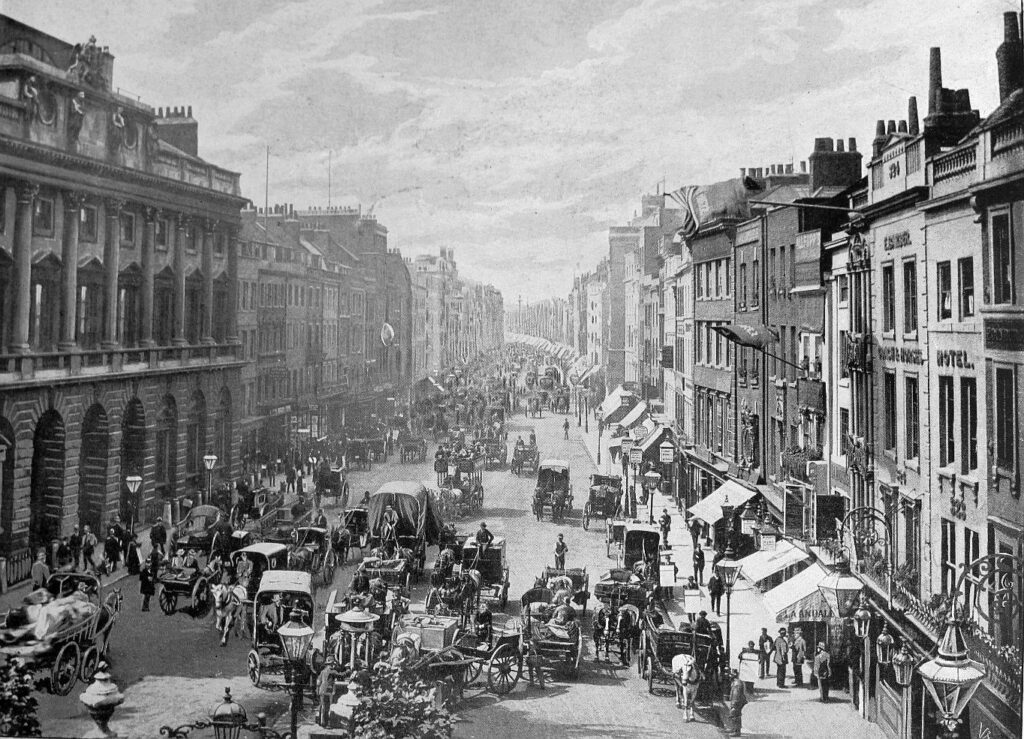
A meeting with deep roots in Westminster
Westminster is one of the oldest Quaker meetings in London. Friends have met for worship here weekly since the seventeenth century, first in hired rooms and lodgings around the Strand, New Palace Yard, and the Savoy, and later in purpose-built Meeting Houses.
Over the centuries the Meeting has moved several times as leases ended, buildings were redeveloped, and the needs of the community changed. The Meeting House you visit today is the fourth purpose-built home for Westminster Friends — and the second on this site.
Earlier Meeting Houses
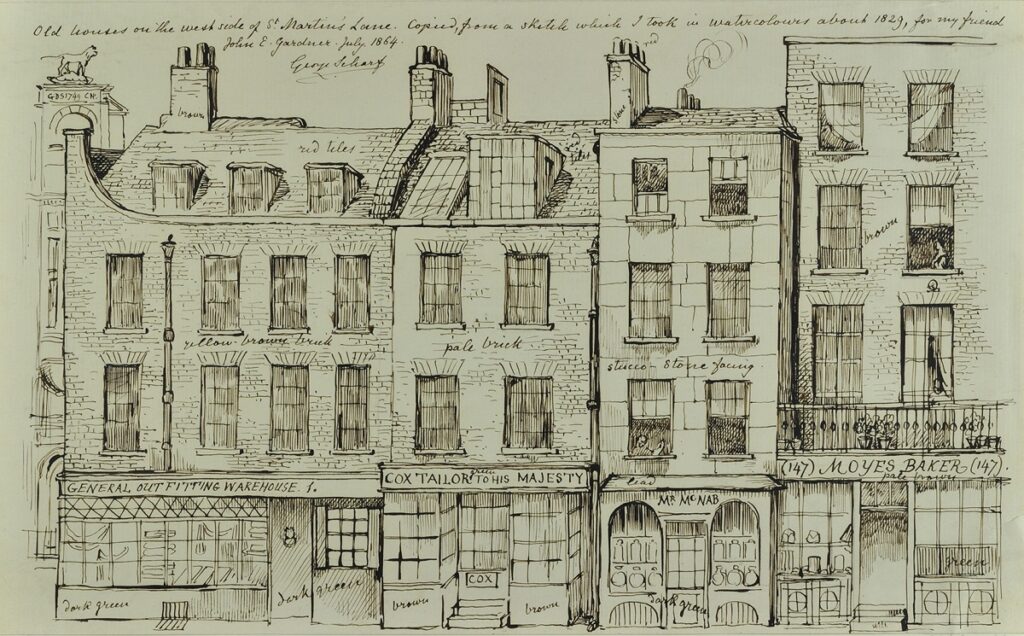
Quakers first established a dedicated meeting space in Westminster in the 1660s, within the precincts of Westminster Abbey. Later Meeting Houses included one on what is now St Martin’s Lane in the late eighteenth century, remembered as a substantial building with a galleried interior.
When that lease ended in the nineteenth century and the site was redeveloped (it is now the Duke of York’s Theatre), Westminster Friends eventually secured a new freehold site nearby – behind the Georgian building at 52 St Martin’s Lane.
The Meeting House on this site: 1883
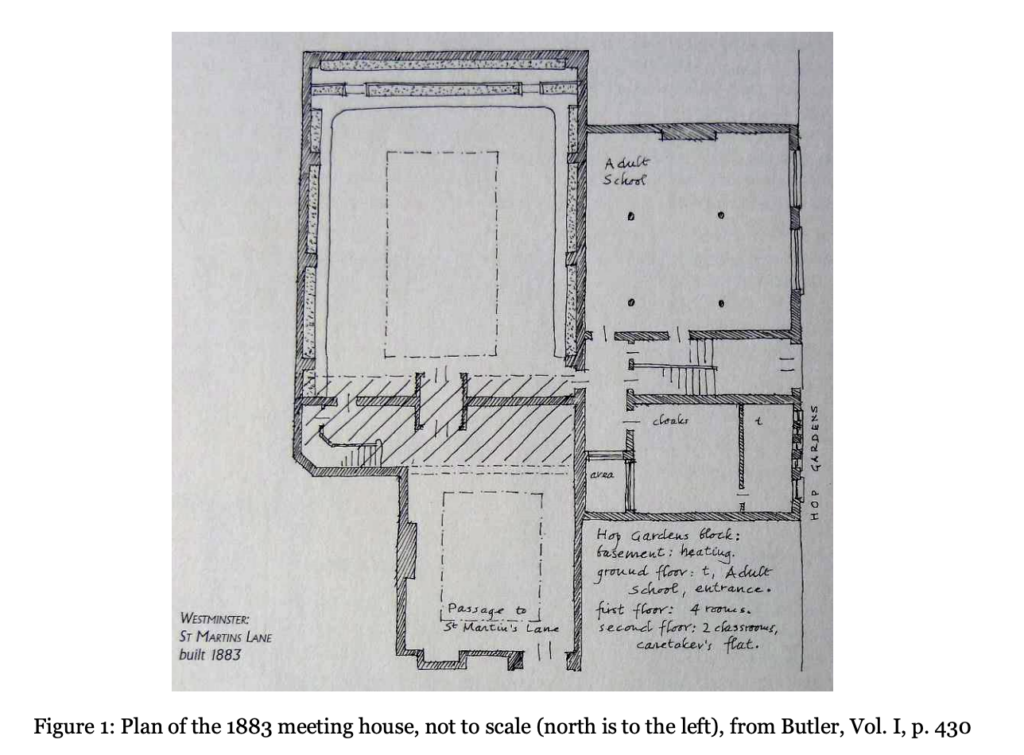
A new Meeting House was built here in 1883, designed by W. W. Lee and J. A. Tregelles. It stood behind the St Martin’s Lane frontage and was reached through a passageway, much as it is today.
It was the first Westminster Meeting House where Friends owned the freehold rather than renting on a long lease. Descriptions from the time suggest the building was not universally admired, though it included notable oak panelling and other interior features.
The Blitz, and rebuilding in the 1950s
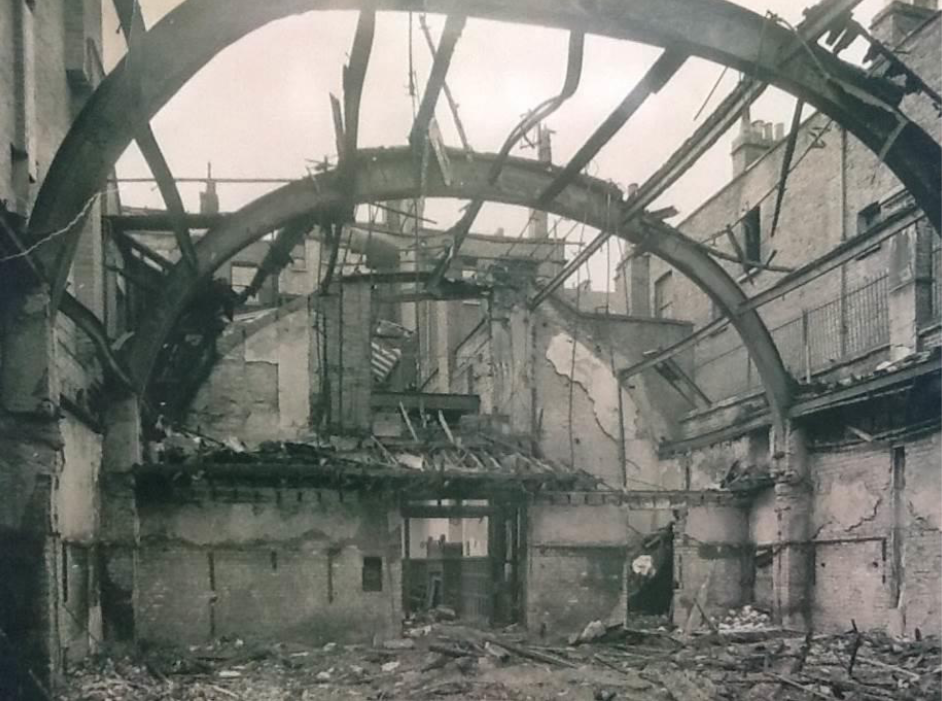
On the night of 16 April 1941, the 1883 Meeting House was gutted by fire bombs during the Blitz. Part of the lobby and schoolroom survived, and Westminster Friends continued worshipping in the remaining spaces for many years.
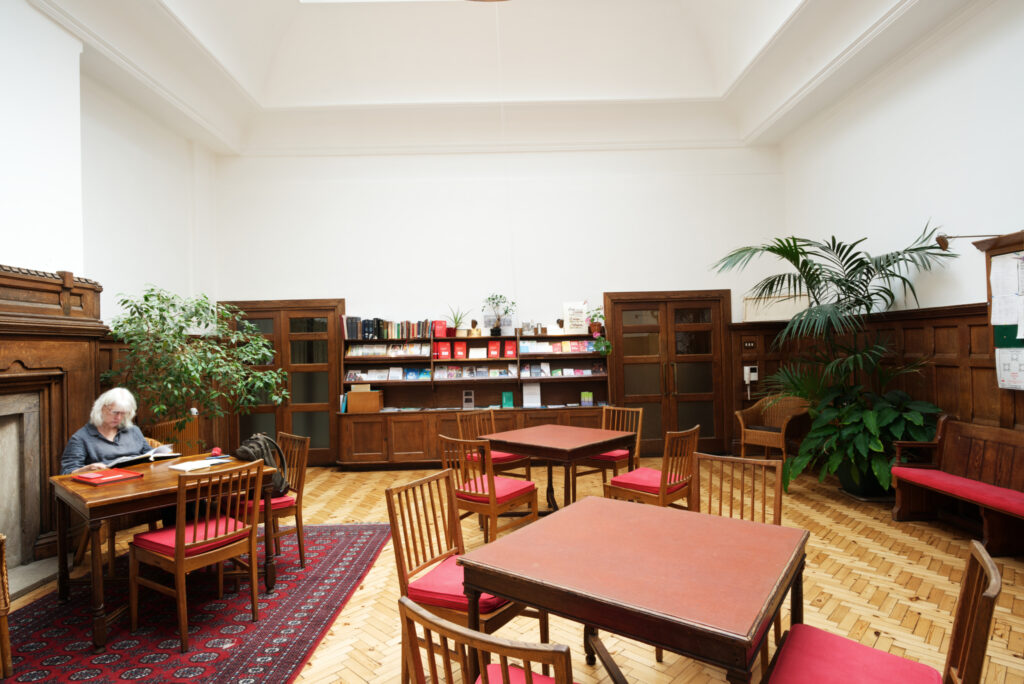
From 1954 to 1956, the Meeting House was rebuilt under the direction of Hubert Lidbetter, a significant Quaker architect best known for designing Friends House (London). Lidbetter retained and incorporated parts of the earlier fabric wherever possible, and the rebuilt Meeting House opened in July 1956.
A major refurbishment took place in 2013-14, upgrading facilities and improving the building for both worship and community use.
What makes the Meeting House special?
Aside from being a building that we all know and love here at Westminster, and that we actively use for worship and service, the building itself has a wonderful character.
- It is physically hidden from the street, its interior has a calm, distinctive character.
- A top-lit meeting room with simple mid-century finishes
- Surviving oak panelling and features from the earlier building
- A large set of fine oak chairs made by Gordon Russell’s Broadway Works (an important part of the 1950s design)
- Rebuilt by a notable Quaker architect
Want to learn more?
If you’d like to go deeper, the Meeting House has been surveyed in detail as part of the Quaker Meeting Houses heritage programme. You can also explore the wider history of Quakers through Quakers in Britain.