About Quakers
Quakers believe that faith is not just about belief or worship, but about how we live – in our relationships, our work, our politics, and our care for the world.
Quakers are a Christian-rooted faith community with no creed and no single way of believing. Some Quakers are Christian, some are not, and many sit somewhere in between. What unites us is not a shared theology, but a shared practice: seeking truth together, living with integrity, and recognising something sacred in every person.
Quaker testimonies
Quaker testimonies are values that have grown out of Quakers’ shared experience of worship, reflection, and action over time. From the earliest days of the movement, Friends believed that faith should be visible in how we live – not just in what we say or believe. As Quakers tried to follow truth in their daily lives, certain patterns of living kept recurring. These came to be recognised as testimonies: ways of bearing witness, through action, to what matters most.
The testimonies are not rules, slogans, or a checklist. They are guiding principles, continually re-examined and re-lived by each generation of Friends. Together, they shape how Quakers worship, make decisions, treat one another, and engage with the wider world.
Simplicity
Quakers are concerned about excess and waste in our society. We want to make sure our use of natural resources is sustainable. We try to live simply and to find space for the things that really matter: the people around us, the natural world, and our experience of stillness.
Truth
Quakers try to live according to the deepest truth we know, and we connect most deeply to this in the stillness of worship. This means speaking the truth at all times, including to people in positions of power. As we are guided by integrity, so we expect to see it in public life.
Equality
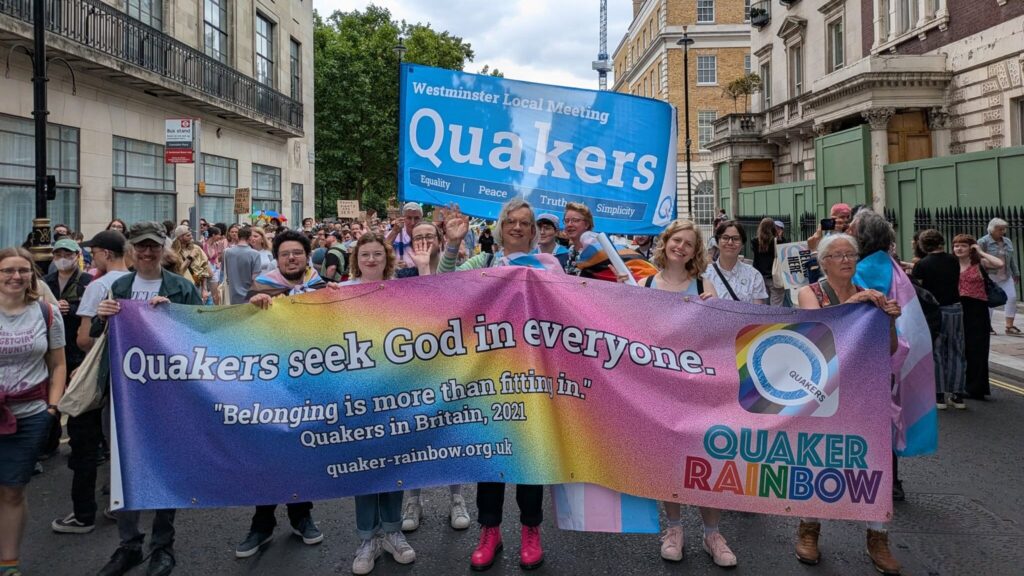
Quakers believe everyone is equal. This inspires us to try to change the systems that cause injustice and that stop us being genuine communities. It also means working with people who suffer injustice, such as prisoners of conscience and asylum seekers. We were campaigning for independent juries in the 17th-century, for marriage equality in the 21st, and for a range of things in between.
Peace
Quakers are perhaps best known for our peace testimony. It comes from our belief that love is at the centre of existence and that all human life is of equal worth. It has led Quakers to refuse military service and work creatively for peace. This has ranged from practical work in areas affected by violent conflict to developing alternatives to violence at all levels. This could be personal or international.
A brief Quaker History
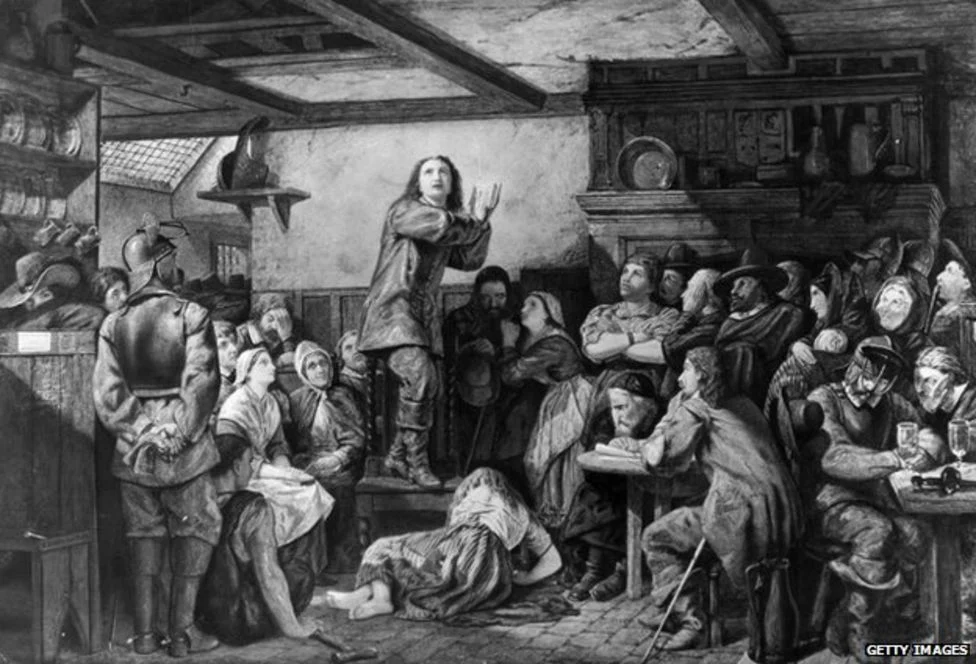
Quakers emerged in England in the mid-17th century, during a time of civil war, political upheaval, and intense religious conflict. Many people were questioning authority – political and religious alike – and searching for a more direct and authentic spiritual life.
Early Quakers, who called themselves Friends, believed that God could be experienced directly by anyone, without the need for priests, set prayers, or church hierarchies. This conviction was radical. It challenged the authority of the established church and undermined social structures built on rank, privilege, and obedience.
Because of this, Quakers were often persecuted. Friends were imprisoned, fined, and mocked for refusing to swear oaths, pay church tithes, remove their hats to social superiors, or participate in violence. Their refusal was not stubbornness for its own sake, but a principled commitment to truth, equality, and conscience.
Over time, Quakers developed distinctive ways of worshipping and making decisions together – through silent worship, careful listening, and collective discernment. They rejected paid clergy and emphasised shared responsibility in community life.
Quaker beliefs also led Friends to engage actively with the world. From the 18th century onwards, Quakers were prominent in movements for the abolition of slavery, prison reform, improved conditions for workers, education for women, and the pursuit of peace. Their faith was not something separate from public life, but something to be lived out through action.
Today, Quakers are found around the world, and the movement continues to evolve. In Britain, Quakers remain a small but active community, seeking to live faithfully in a complex and changing society. While beliefs and language may differ between individuals, the core Quaker commitment remains the same: to seek truth, listen deeply, and let faith shape how we live.
Quaker Worship
The meeting ends when two Friends shake hands. Notices are shared afterwards, and people usually stay to talk over tea.
Everyone is welcome at a Quaker Meeting for Worship, whatever your beliefs, doubts, or background.
Our worship is based on shared silence. There is no priest, sermon, or set liturgy. We sit together in stillness, waiting attentively. Quakers often describe this as “waiting on God”, though people understand that in different ways.
Sometimes, someone may feel led to speak out of the silence. This is called spoken ministry. It is offered simply and without discussion. Afterward, the meeting returns to silence.
Quakers have no paid ministers. We believe everyone has a role in worship and community life.
Want to know more?
There is a wealth of information available on the Quakers in Britain website (the national body for Quakers in Britain).
But you can also come and talk to us, here at Westminster. We’re always happy to chat about our personal experience of Quakerism. If you’re curious and have some questions in advance, do get in touch.
Please borrow books from the library at Westminster. Just write your name in the exercise book in the corner of the room and bring the book back when you have finished.