What is spoken ministry?
In Quaker worship, spoken ministry refers to words that are offered aloud during meeting for worship. These words arise from the shared silence and are offered in a spirit of listening and care for the whole meeting. Spoken ministry is always optional. Many Friends never speak in meeting, and that is entirely fine.
A little history
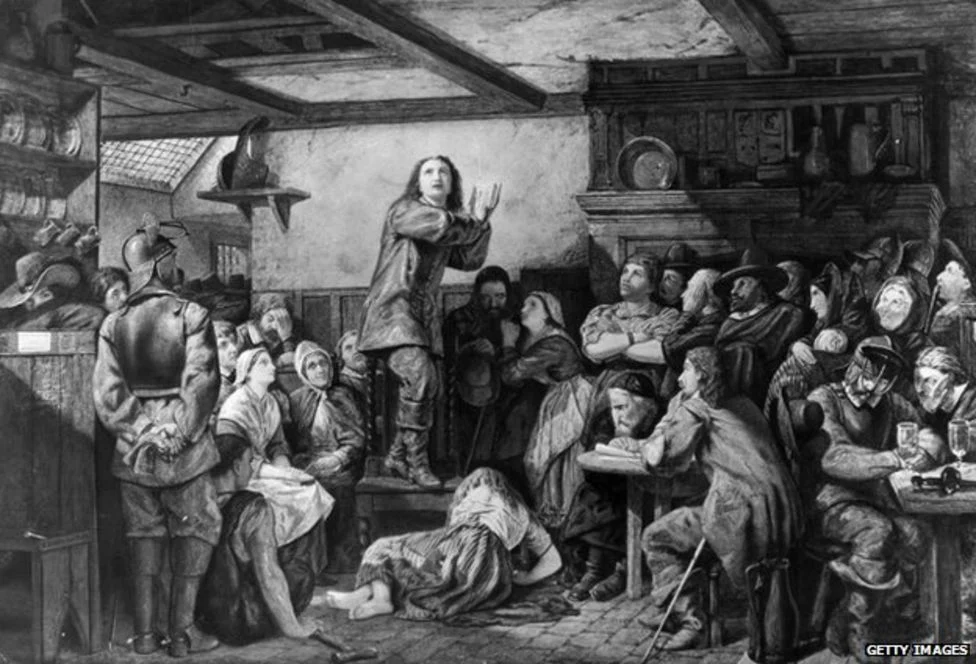
From their beginnings in the 17th century, Quakers rejected the idea of a paid or ordained clergy. They believed that anyone could be called to speak to spiritual truths, regardless of education, gender, or status. This belief shaped Quaker worship as it is today: un-programmed, grounded in silence, and open to all.
Some common questions
| How do people understand ministry today? | Friends understand spoken ministry in different ways. Traditionally, Quakers speak of being guided by the Inner Light, Spirit, or that of God within. Others experience ministry as something that arises from deep attentiveness, reflection, or shared silence. However it is understood, spoken ministry is usually experienced not as something planned or performed, but as something that comes to you — often unexpectedly. Quakers often say that ministry is received rather than decided. |
| What is the purpose of ministry? | Spoken ministry is offered for the meeting as a whole, by the Friend who speaks it. It may give voice to something already present in the silence; offer comfort, challenge, or clarity; help the meeting feel more gathered or connected. |
| How long should ministry be? | Ministry is usually brief, and it is held within silence before and after it is spoken. |
| What if I feel moved to speak? | It is common to feel unsure or nervous about speaking. Many Friends experience hesitation, doubt, or even fear — especially the first time. A helpful question some Friends ask themselves is: “Is this meant for me, or is it meant for the meeting?” If, after sitting with a leading, it still feels right to speak, you are encouraged to trust that sense and offer your words simply. And if you choose not to speak, that too is a faithful part of worship. |
| What if no-one speaks? | Some meetings pass in complete silence. This is not a failure of worship. Silence itself is worship, and many Friends experience meetings without spoken ministry as deep, restful, and meaningful. |
Some simple guidelines
- Try not to minister in the first or last ten minutes of a one-hour meeting for worship. For shorter meetings you can reduce these times e.g. five minutes for a thirty minute meeting. This allows the meeting to settle into, and conclude in, silence.
- Be brief.
- Leave silence after previous ministry so that it can be taken in and settle.
- ‘Beware of speaking predictably or too often’; (Quaker Advices and Queries 13). In plainer English: if you find yourself speaking at every meeting, question yourself whether you are truly being moved to speak so often.
- Try to speak clearly so all can hear. If you can, you should stand up to minister.
- Before ministering ask yourself from a deep place if your ministry is in a true spirit of worship and whether the message is for the whole meeting rather than just for yourself.
- Only minister once per meeting.
- By all means build on previous ministry, but don’t debate it.
- If you want to give a notice or make a protest, meeting for worship is not the place for it. Notices can be given after the meeting.
- Ministry should arise from the meeting itself, and not consist of pre-prepared speeches or pre-selected readings.
- Arriving in time for the start of the meeting, and not leaving before the end, will help maintain the worshipful atmosphere in which ministry is given and received.
After considering our guidance, if you do feel moved to minister then please do so – it will enrich our worship. And please don’t worry if you feel shy or frightened. You are, quite literally, among Friends!
